
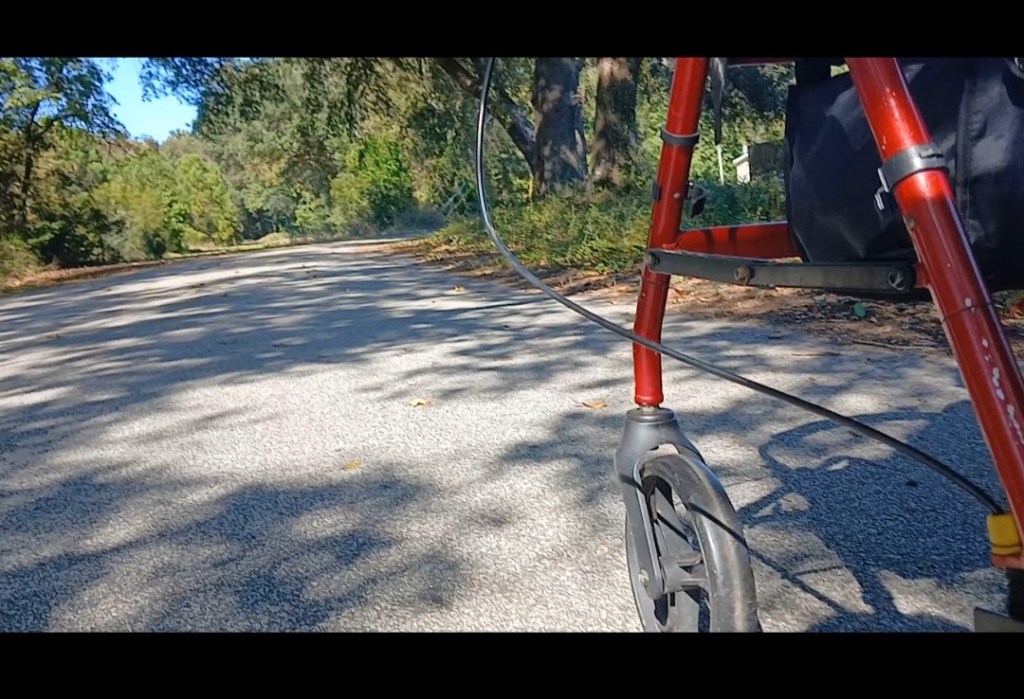
This is an initiative to move towards strengthening relationships and healing communities with compassionate care
Over the past few months, I have thought a lot about my patients, my job, and healthcare in general. I found myself asking, “in what ways can I move the needle forward positively?”
I have wanted to look beyond the objective metrics, statistics, and measurable outcomes, to something–perhaps less measurable–yet still of great significance; something that moves the needle forward in how compassionate healthcare is delivered in Charleston and across America. I hope to start tipping the needle forward with this discussion.
A Realized Need
I’ve been in home healthcare for over 12 years. I often feel like I step into crisis after crisis, with “life” fires burning. It’s difficult to know where to start, and sometimes it’s easier to think “just add in a social worker and this will be fixed”. But I realize it’s far more complex. I’ve had to ask the question over and over “what does this patient need the most? And often, “why is it so hard to get it for them?”
From what I have seen and experienced, I believe that the greatest unmet need for many of our patients is connection. Isolation and loneliness are impacting many lives in our community, and when health issues arise, it can deepen the separation. The loss of the ability to access community impacts the hearts of our patients, which long for the presence of others in their lives. This separation has ties not only to the physical, mental, and emotional well-being of our patients, but also our community as a whole. This leads me to wonder: What are we, individually and collectively, willing to do about this? And, what are healthcare organizations willing to do about this?
As clinicians, the aim of our individual mission ties into our organization’s mission, and should be grounded in serving our patients well. We should want what is best for each patient we serve. Connecting well with our patients can lead to conversations and a greater understanding of what things are truly needed that can powerfully impact their situation and lead to long-term improvements in their life. I have seen patients’ lives changed by compassionate connection with the clinicians who are serving them.
Connecting well with patients does not end with the benefit towards the patient. There’s a feedback loop in which both the patient and the clinician benefit. One from giving and one from receiving; often–when done well–both are able to give and receive. And this, in turn, extends to benefit their communities.
Expanding Compassionate Care
An expanded vision of a compassionate care model for healthcare providers centered around strengthening and equipping their clinicians to provide and deliver more compassionate healthcare should focus on the community as a whole–the organizations providing the healthcare services, the clinicians living and working in the community, and patients in the community being served. When providers and clinicians are equipped and motivated to serve compassionately, and patients receive that service, I believe the community as a whole will flourish. The greater equipping of individual clinicians to serve compassionately may strengthen the organization (provider), enhance the patient-clinician and patient-provider relationships, and return benefits to the community in which the clinician and patient live.
This implementation of this model, although not entirely new, can be unique in the sense that it should include a volunteer-driven, community-supported network designed to bring human connection to patients who are lonely, isolated, or in crisis. Through relationships and community, I believe tangible life needs will also be met. Take Charleston, for example: our city is full of places, groups, and people that are eager and willing to help bring connection, including local churches and non-profits. In a world where we are inundated with forms, papers, phone numbers, and wait-lists, we forget that there are human connections within reach, and there are ways to diminish the barriers to access these.
This model is realistic here in Charleston; I believe it can be effectively implemented over time, through compassionate organizations and providers, community involvement, improved inter and intra-organizational communication and unity, better utilization of existing resources, and the energy and love of compassionate people willing to serve.
A Providing, Unified, Community-Building Model Driven by Love
Consider a perspective model in which relationships are strengthened so that the mission expands beyond the patient, and into the places and spaces that both the patient and the clinician serving them will go. Consider a greater equipping of the clinicians serving, and the benefits of patients who receive that service, extending beyond the patient; movement from their homes, to their families, their neighborhoods, to their workplace, to their stores, to churches and nonprofits, and to their communities.
A healthcare organization and providers focused on providing truly compassionate care will look not only towards the patient but beyond, understanding that the bond between patients and clinicians extends into their communities and is essential to the relational prospering of the city. Serving patients well extends to serving communities well. When the providers, clinicians, and patients are strengthened, our communities are strengthened.
But what truly has the power to transform communities? Behind any delivery of compassionate care is a corporate heart that is motivated by love and gratitude. The primary directional outflow of this love, implemented in compassionate healthcare delivery, is giving, not taking. This love moves forward and steps into hard situations and dark places. This love reaches into lives that are broken, hurting, suffering, and even hopeless. This love moves to protect the weak and the vulnerable. This love moves to serve each person because of the value of who they are. This love extends towards communities to bridge gaps, connect the isolated, and bring unity. This love acts to serve, even when it is difficult, or comes at a cost. This love walks into our communities and brings change.
The power of a model driven by love, compassion, and gratitude, is that it can unite healthcare organizations and providers with the communities they are serving. The benefits of unity in the provider-clinician and clinician-patient relationships will bring greater unity in our communities and prosperity to our city.
Moving Forward
Healthcare organizations focus on providing and delivering excellent care, and current healthcare models focus on patient-centered care. While this is right and good, I want to see a well-balanced healthcare model in which clinicians and patients are each served well. I want to see healthcare organizations fully realizing and understanding the benefit of serving, equipped and strengthening the clinicians, for the benefit of the patient, the clinician, the organization (provider), and the community. I want to see our government and the offices of Medicare and Medicaid fully recognize the value of supporting these organizations in providing compassionate healthcare, as it will extend to communities across America.
There’s no simple formula to implement this into a model for compassionate health care, but starting with a conversation here, I hope, will move the needle a little farther forward. Let’s help our community; the time to act is now!
Are you in?
Alex Gerber, Doctor of Physical Therapy, Founder, Gathered Charleston
gerberxc@gmail.com
 Moving Forward
Leave a comment